We started withone attachment
Two guys in their twenties, in Tampa, building a cable attachment company around durability, longer service life and better performance than the rest of the category offers. It began with the rope. It does not end there.
He saw it
from both sides
Josh Gallia started as a personal trainer at a commercial gym. On the floor every day, he watched rope attachments fray, go uneven, and change how a movement felt. A rope that is longer on one side than the other pulls the body out of line, and members feel it even when they cannot name it. It frustrated him as a coach.
Then he moved into an assistant general manager role, and he saw the other half of the picture. The line items. The replacement orders going out again. The same consumable reappearing in the budget, quarter after quarter, treated as a cost of doing business because nobody had ever questioned it.
Those two views are the whole company. The coach knew the attachment was ruining the rep. The manager knew exactly what it was costing to keep replacing it. Neither problem is unique to rope, which is why the company was never going to stop there.
Then he sat
on it
The idea did not turn into a company straight away. It sat with him for about three months. Long enough to stop being a reaction to a bad day at work and start being something he could not put down.
When he finally moved on it, it began the way most real things do. Sketches. A mentor who told him what the actual next steps were, rather than cheering him on. Manufacturing conversations and a long list of unglamorous actionables to work through in order. That was roughly three years ago.
Twelve
prototypes
Eliminating the fray point took twelve attempts. Each one answered a question the last one raised, and most were wrong in a way that only became obvious once the part existed.
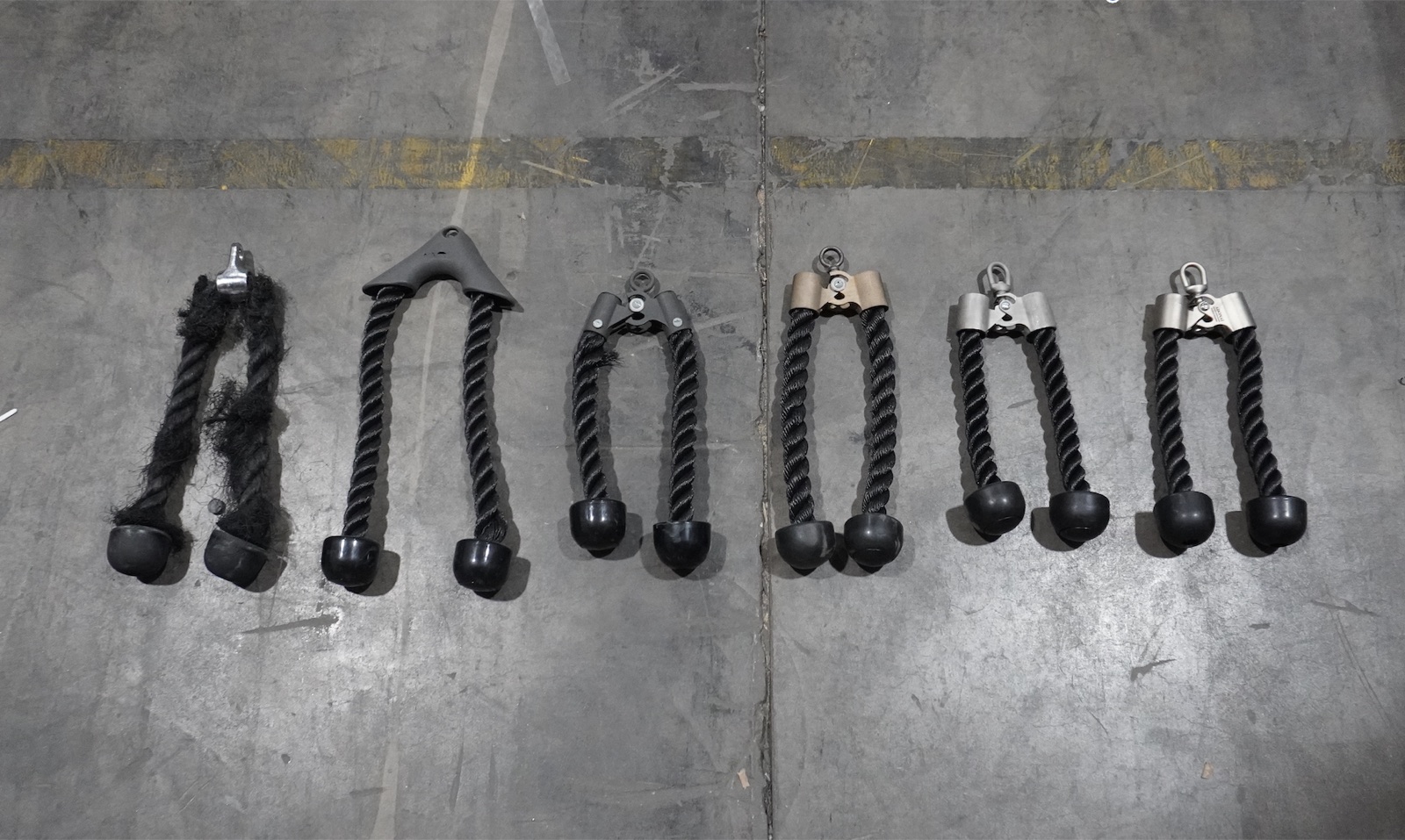
Plastic was the first thing cut. Anything moulded fails in the same place the original rope did, just more slowly, and a part that flexes under load eventually lets the rope grind through. Several samples were rejected on exactly that basis.
The turn came with the right manufacturer and a metal housing. Hold the rope in metal, hold the angle, and the friction point that destroys a standard attachment is no longer there to fail. That became Angle Lock Technology. Paired with the dual rope system and guaranteed equal-length ropes, it is what gives longer service life and the same muscle engagement every rep.
The name
Adonai is a Hebrew name for God. It means sovereign one.
It is on the product because the business exists to glorify God, and because it is built on faith and trust in the Lord. That is not a marketing position and it is not kept quiet.
It shows up as a standard rather than a slogan. The work is excellence unto the Lord, which in practice means a sample that is not right does not ship, whatever it costs to say so.
Where it is
now
Adonai attachments are on floors domestically and internationally, in commercial gyms and independent clubs. We are rolling out into university recreation and athletics facilities, and running pilots with operators working through their floors one site at a time.
Two guys in their twenties are building this from the ground up, out of Tampa. When an operator wants to hang one unit on one floor before committing to a rollout, that conversation happens with the people who designed it.
A whole line of cable attachments is in development through next year, starting with Adonai Bars. Same housing standard, same warranty, the same refusal to ship a consumable.
Where things stand
What we will not do
Build it to be bought once
A product designed to be replaced every year would be better business in the short term. We are not interested in that, and the two-year warranty is how we put it in writing.
Ship nothing we would not hang on our own rack
Twelve prototypes and a stack of rejected samples exist because of this. The work is excellence unto the Lord, so if a sample comes back wrong it does not go out, even when the order is already sold.
Answer the person, not the ticket
There are two of us. Every operator deals directly with someone who knows the product down to the housing, on any attachment in the line.
Put one on
your floor
The fastest way to judge this is to hang one on a station and leave it there. Multi-site operators do exactly that before they order for every club.